
Nvidia faces leadership uncertainty as Jensen Huang steps down after 33 years
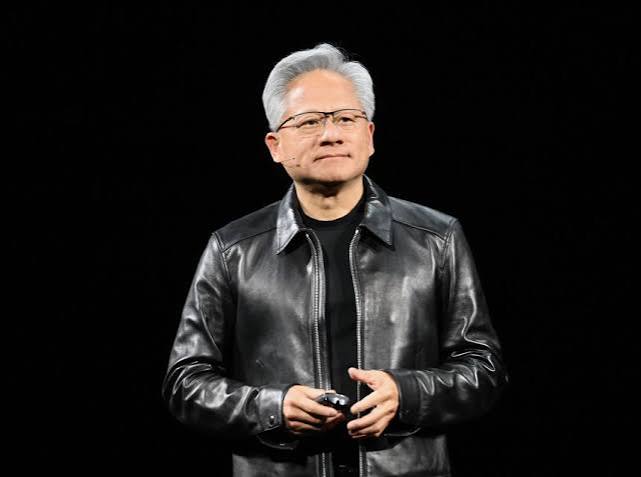
Ex Nvidia CEO, Jensen Huang

The departure marks the end of a 33-year tenure during which Huang transformed Nvidia from a graphics processor manufacturer into one of the most influential companies in the global technology industry, with its chips playing a central role in the rapid expansion of artificial intelligence.
The company’s board has appointed chief financial officer Colette Kress as interim CEO. Kress, who joined Nvidia in 2013 after holding senior financial positions at technology companies including Cisco and Microsoft, will retain her finance responsibilities while the board considers candidates for a permanent appointment.
Her interim appointment represents the first time since Nvidia’s establishment in 1993 that someone other than Huang will lead the business.
The board has also appointed long-serving director Harvey Jones as its first chairperson. Jones previously led semiconductor design software company Synopsys and has served on Nvidia’s board since its founding year.
Leadership transition raises questions
The circumstances surrounding Huang’s reported departure have attracted considerable attention, particularly as questions emerge about the potential impact on Nvidia’s corporate governance and market position.
The company’s announcement did not provide a detailed explanation for the leadership change. It acknowledged Huang’s contribution to Nvidia and the broader technology sector, describing his influence as significant.
The development follows reports of an investigation into allegations concerning Huang's personal relationships, including claims involving individuals connected to the technology and business sectors. Huang reportedly acknowledged marital infidelity in an internal communication to employees.
The reports have intensified scrutiny of the company’s leadership at a time when Nvidia remains central to global investment in artificial intelligence infrastructure.
Market reaction puts pressure on the company
Uncertainty surrounding the leadership transition has reportedly contributed to significant volatility in Nvidia shares.
The company is said to have lost approximately US$430bn in market capitalisation over two trading sessions, while its shares declined further in premarket trading following news of Huang’s departure.
The scale of the reported market reaction highlights the extent to which investors associate Nvidia’s growth and strategic direction with its co-founder.
Board chair Harvey Jones sought to reassure shareholders, saying the board had confidence in Kress and the existing executive team. He indicated that business operations, customer commitments and the company's product development plans would continue as normal.
Kress, meanwhile, has pledged to build on the platform established under Huang's leadership, signalling continuity rather than an immediate change in corporate strategy.
Can Nvidia maintain its AI dominance?
The immediate challenge for Nvidia will be demonstrating that its competitive advantage is supported by more than the reputation and leadership of its founder.
The company has established a formidable position in the AI semiconductor market through its advanced graphics processing units, software ecosystem and relationships with major technology companies investing heavily in AI infrastructure.
However, Huang's departure raises questions about whether Nvidia can maintain the same pace of innovation, strategic execution and customer confidence under new leadership.
Kress's first major test will come on 17 November, when Nvidia is scheduled to release its third-quarter financial results for the 2027 financial year.
Investors will be looking for reassurance on revenue growth, demand for AI chips, supply capacity and the company's outlook, alongside indications of how the leadership transition could influence its longer-term strategy.
For Nvidia, the challenge is no longer simply maintaining its position at the forefront of the AI revolution. It is proving that the business can sustain that position beyond the leadership of the person who built it.