
Telkom expands satellite broadband strategy through Amazon Leo partnership
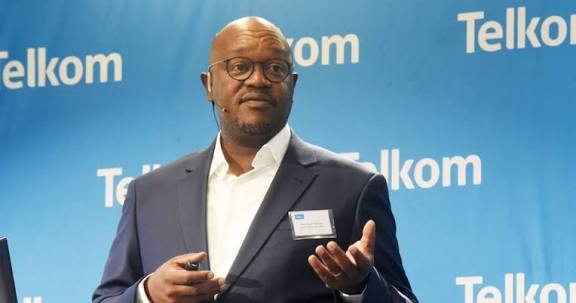
Telkom Group CEO Serame Taukobong

The partnership will extend Telkom’s connectivity offering to businesses and public sector institutions in rural and remote parts of the country where conventional fibre and mobile infrastructure remains limited.
The agreement was signed by Openserve on behalf of the Telkom Group and will see three of its business units take responsibility for different market segments.
Openserve will distribute the service to enterprise and qualifying public sector customers, both directly and through sales agents, while also acting as the service provider. BCX will incorporate Amazon Leo connectivity into its managed network, cloud and cybersecurity solutions. Telkom Business, meanwhile, will focus on small and medium-sized enterprises operating in underserved areas.
The partnership gives Telkom another option for addressing connectivity gaps without relying exclusively on the expansion of terrestrial infrastructure.
Telkom Group CEO Serame Taukobong said the strategy would combine existing infrastructure with satellite technology to extend the company's reach.
The group said configured enterprise packages, depending on the subscription plan and terminal equipment, could deliver download speeds of up to 1Gbit/s and upload speeds of up to 400Mbit/s.
However, Telkom has yet to disclose pricing or confirm when the service will become commercially available in South Africa. Further details are expected closer to launch.
Growing competition in satellite connectivity
Telkom's agreement follows Herotel's appointment as Amazon Leo's first South African distribution partner in July 2026.
Herotel is preparing to introduce a satellite broadband offering under the Evry brand, targeting residential customers and smaller businesses. Its commercial launch is expected in 2027.
The emerging distribution model is significant for South Africa's satellite broadband market, particularly as regulatory requirements surrounding foreign ownership have complicated Starlink's entry into the country.
Amazon Leo's distribution arrangements allow local telecommunications companies to bring the service to market through their existing licensed operations, rather than relying on Amazon establishing an independent local telecommunications business.
Telkom has previously called on the Independent Communications Authority of South Africa (Icasa) to reconsider aspects of its ownership requirements, arguing for greater flexibility in the regulatory framework.
Unlike Herotel's planned consumer and small-business offering, Telkom's initial strategy is primarily focused on enterprise and public sector connectivity.
The companies have not disclosed whether the distribution agreement includes exclusivity provisions.
Satellite technology extends Telkom's network reach
Beyond providing internet access to customers, the agreement could also strengthen Telkom's own telecommunications infrastructure.
The arrangement includes satellite connectivity for qualifying telecommunications backhaul applications, allowing Amazon Leo to provide primary or backup connections to fixed cellular sites.
This could prove particularly useful in geographically isolated areas where connecting mobile network infrastructure through fibre is commercially challenging or impractical.
The partnership also comes as Telkom reassesses its infrastructure investment priorities. The group recently reported a significant reduction in fibre capital expenditure during the six months to September 2026.
Amazon Leo could therefore provide an alternative means of extending broadband coverage, particularly among businesses that cannot wait for conventional fibre infrastructure to reach their locations.
Andrew Dawson, Telkom's managing executive for small and medium business sales, said the service would enable the company to connect businesses in rural areas without waiting for fibre network expansion.
Amazon is developing a constellation of 3,236 low-Earth orbit satellites to deliver broadband connectivity across markets. The technology is designed to provide high-speed internet with lower latency than traditional geostationary satellite services.
For Telkom, the partnership represents an opportunity to diversify its connectivity portfolio while extending its addressable enterprise and public sector markets.
The announcement also comes amid reports of preliminary discussions between Telkom and MTN regarding a potential transaction involving the telecommunications group, adding another dimension to an already evolving South African telecoms market.