
Eskom positions South Africa as a hub for Africa’s growing data centre market
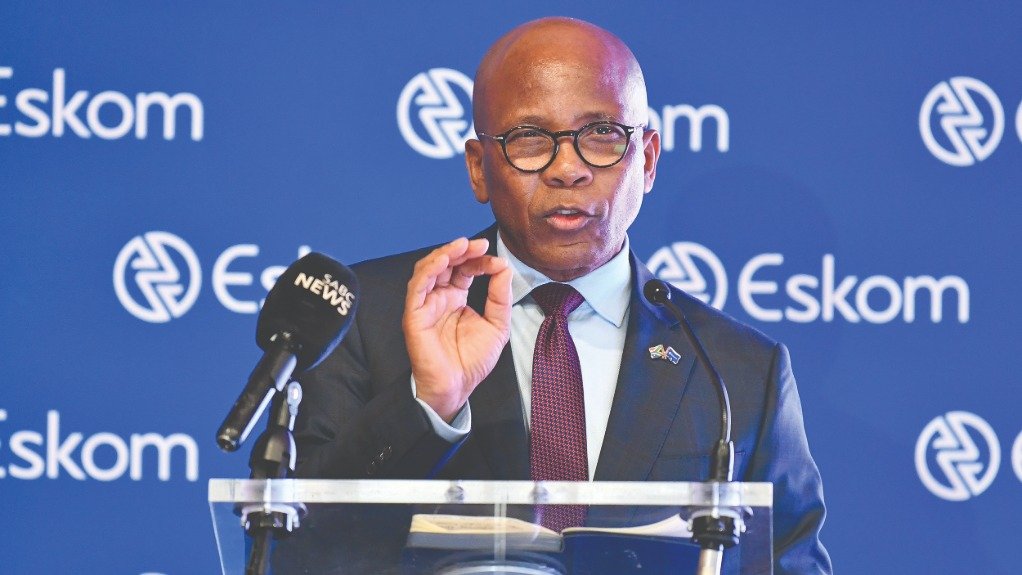
Eskom chairman Dr Mteto Nyati

South Africa could strengthen its position as Africa’s leading data centre destination as demand for digital infrastructure accelerates, with Eskom identifying reliable electricity supply as a critical factor in attracting investment.
Speaking at the World Broadband Association’s (WBBA) Broadband Development Congress Africa 2026 in Cape Town, Eskom chairman Dr Mteto Nyati said the utility was shifting its focus towards supporting the development of data centres across South Africa and the broader Southern African region.
The opportunity comes as the global business environment undergoes significant changes, driven by geopolitical uncertainty, shifting trade relationships and growing competition for strategic infrastructure and resources.
Nyati said these developments highlighted the importance of countries building greater economic resilience, strengthening local capabilities and reducing reliance on external markets.
For South Africa, this includes leveraging its electricity infrastructure to support the expansion of digital services and attract large-scale technology investment.
The country already accounts for an estimated 70% of Africa’s operational data centre capacity, reinforcing its position as the continent’s primary destination for hyperscale infrastructure. Further investment in cloud computing, artificial intelligence and digital services is expected to increase demand for data centre facilities and the electricity required to operate them.
As Africa’s largest electricity producer, Eskom believes it can play a central role in meeting this demand. The utility operates 31 power stations and has an installed generation capacity of approximately 48GW.
Nyati said Eskom’s recovery presented an opportunity to reposition the organisation as an enabler of economic growth, rather than simply a supplier of electricity.
He identified South Africa’s existing energy infrastructure, fibre connectivity, technical expertise and access to regional markets as important advantages in attracting international data centre operators.
However, securing investment will require more than electricity generation capacity. Effective collaboration between government, the energy sector, telecommunications providers and private investors will be essential to creating an environment in which major infrastructure projects can be developed efficiently.
One of the immediate priorities is establishing a coordinated national approvals framework for data centre developments. This would involve aligning regulatory requirements, allowing different approval processes to run concurrently, introducing clearer service timelines and creating a central mechanism for resolving delays.
Greater policy certainty will also be important for investors considering long-term infrastructure commitments, particularly where projects involve operations and energy supply arrangements across national borders.
Nyati said Eskom was interested in working with government and regional partners to support electricity requirements beyond South Africa, recognising that energy security would be an important foundation for wider economic development across the continent.
For the data centre industry, the availability of dependable, affordable and sustainable electricity remains a fundamental investment consideration. As digital infrastructure expands, the ability to secure sufficient power, connect to the national grid and obtain regulatory approvals within predictable timeframes will increasingly influence where investors choose to establish their facilities.
Eskom’s ambition is therefore to position energy infrastructure as a competitive advantage for South Africa, while supporting the region’s broader digital transformation.
The challenge now is to translate this ambition into coordinated action, ensuring that electricity supply, connectivity, regulation and investment planning develop together.
For South Africa, the opportunity extends beyond hosting more data centres. It is about strengthening its role as a regional digital infrastructure hub and ensuring that the economic benefits of Africa’s growing digital economy are captured locally.