
Ngcaba pledges R25m towards proposed R100m fund to accelerate South Africa’s AI start-ups
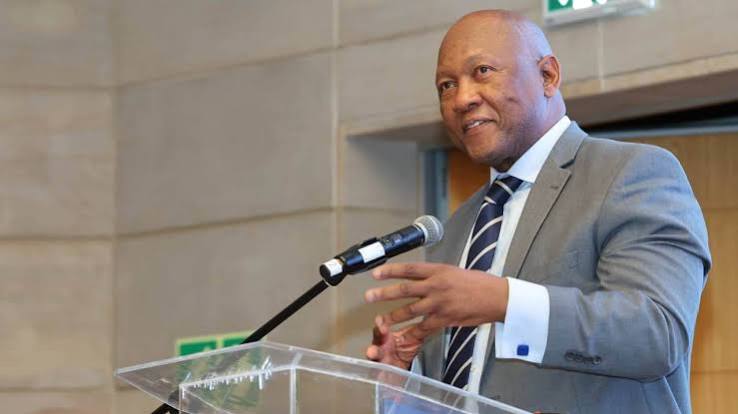
Andile Ngcaba, Executive Chair and founding partner of Convergence Partners and Solcon Capital

The initiative seeks to bring together development finance institutions (DFIs) and private sector investors to provide emerging technology companies with access to the computing infrastructure required to build, train and commercialise AI solutions.
Ngcaba, executive chair and founding partner of Convergence Partners and Solcon Capital, outlined the proposal during a meeting between President Cyril Ramaphosa and representatives of South Africa’s small business sector in Silicon Valley on Wednesday.
The discussion took place alongside the South Africa and the AI Opportunity Conference, where a business delegation accompanying the president examined opportunities to translate developments in the United States’ technology ecosystem into practical initiatives for South Africa.
Ngcaba proposed that the R100 million fund be launched during the president’s next State of the Nation Address, with his contribution accounting for a quarter of the initial capital.
He also called on development finance institutions to participate in the initiative, arguing that a coordinated funding model could make advanced computing resources more accessible to entrepreneurs who would otherwise struggle to afford them.
For early-stage AI businesses, access to computing capacity remains a substantial financial obstacle. Graphics processing units (GPUs), which provide the processing power needed to train and operate sophisticated AI models, can represent a significant proportion of development costs.
Ngcaba said the proposed fund would initially provide R100 million in support, with the possibility of increasing its capital as demand grows.
The proposal reflects a broader challenge facing South Africa’s technology sector: ensuring that local entrepreneurs have access not only to investment capital, but also to the infrastructure needed to compete in an increasingly AI-driven global economy.
Building local AI capabilities
The discussions also highlighted the importance of developing South Africa’s own intellectual property and reducing reliance on technology developed elsewhere.
Nuclear scientist and telecommunications entrepreneur Nomso Kana argued that the country already possesses much of the scientific and technical expertise required to develop competitive AI applications.
Kana pointed to her company's work in applying deep-learning technologies to telecommunications, drawing on technical capabilities developed within the nuclear science sector. She said the business had also secured funding to advance its solutions.
Her contribution to the discussion centred on the need to strengthen financial support for emerging technology companies, particularly through the Department of Small Business Development (DSBD).
Kana called for an increase in the department’s funding to help entrepreneurs secure early-stage and bridge capital, enabling them to develop and train locally relevant AI models.
She argued that a stronger financing environment could encourage more businesses to enter the sector and turn South Africa’s existing technical capabilities into commercially viable products.
From ambition to investment
The proposed fund comes as governments and businesses increasingly recognise computing infrastructure as a strategic resource in the global AI economy.
While access to skilled professionals and investment remains important, the cost of specialised computing hardware and processing capacity can prevent smaller companies from progressing beyond research and early development.
A fund supported by private investors and development finance institutions could help address this gap, provided it is structured to give emerging businesses affordable and practical access to the resources they need.
However, the proposal will require commitments from additional funding partners, as well as clarity on how capital will be allocated, which businesses will qualify and how access to computing infrastructure will be administered.
For South Africa, the longer-term opportunity extends beyond funding individual start-ups. Building a sustainable domestic AI ecosystem will require coordinated investment in infrastructure, research, skills development and commercialisation.
Ngcaba’s R25 million pledge provides a proposed starting point. The extent to which the initiative gains support from development finance institutions and other industry participants will determine whether it can develop into a meaningful financing mechanism for the country’s next generation of technology businesses.