
HealthTech Connect 2025 explores how digital innovation is reshaping healthcare delivery
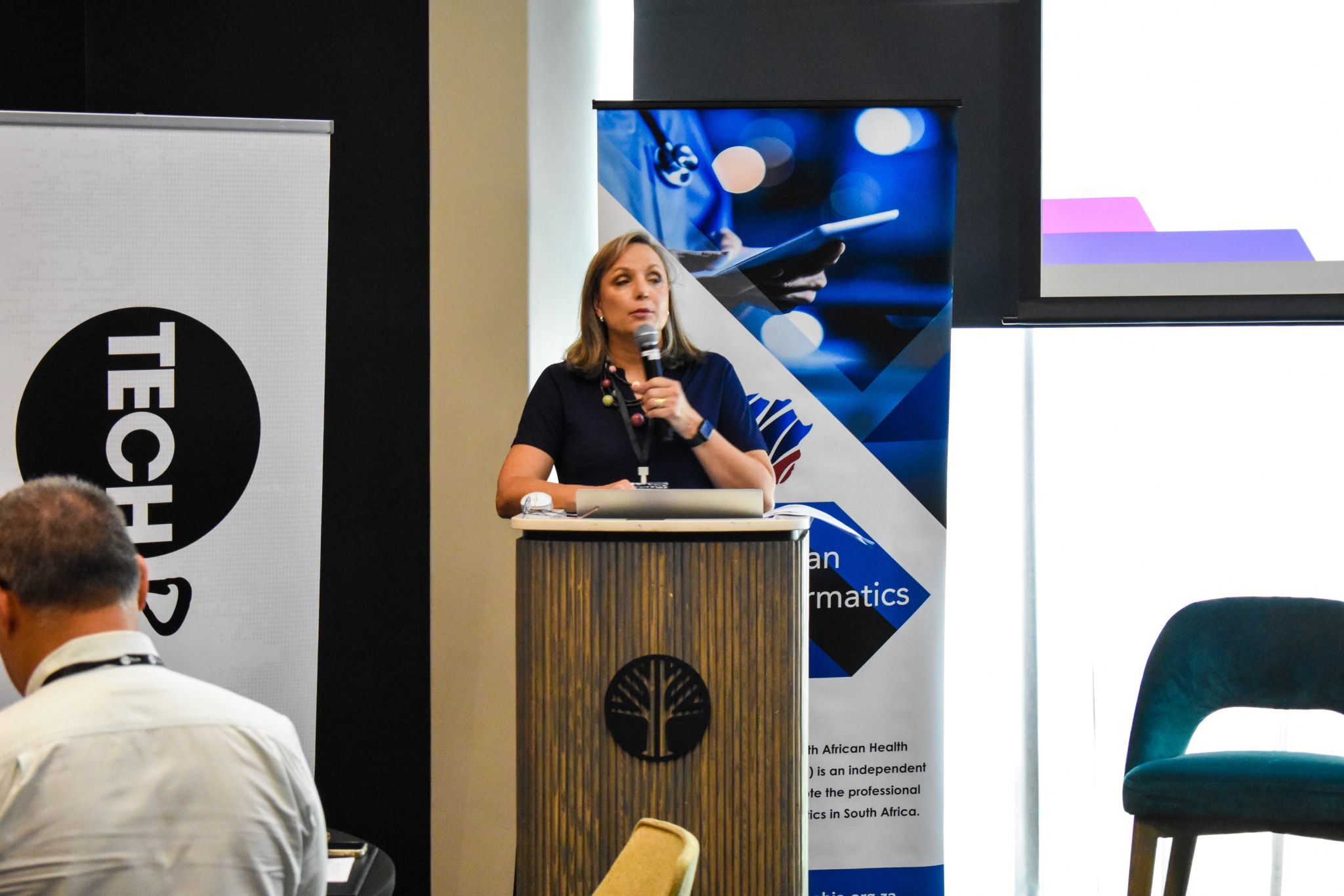
Senior government officials, healthcare CIOs and digital transformation leaders convened at HealthTech Connect 2025, hosted by Tech Review in partnership with the South African Health Informatics Association (SAHIA), to unpack how technology is transforming South Africa’s healthcare system.

The event took place on Wednesday, 26 November 2026, at the Courtyard Hotel, Waterfall City, bringing together stakeholders from across the public and private healthcare sectors to examine the role of AI, cybersecurity, blockchain, telehealth, medical devices and data-driven governance in improving patient care and system performance.
HealthTech Connect 2025 focused on practical, healthcare-specific solutions aimed at improving service delivery, operational efficiency and patient experience, while addressing the realities of constrained resources and growing demand on the health system.
<b>Cybersecurity takes centre stage in digital health</b> Cybersecurity emerged as a critical theme, with Daleen Meinhardt, solutions architect at Restack, delivering a keynote on building resilient and POPIA-compliant digital health systems.
Meinhardt outlined the growing cyber risk facing healthcare organisations as digitisation accelerates, noting that sensitive health data, interconnected systems and legacy infrastructure make the sector particularly vulnerable.
She unpacked the technical measures required to secure digital health environments, including encryption of data at rest and in transit, multi-factor authentication, network segmentation, endpoint protection, regular vulnerability assessments, immutable offline backups and Zero Trust architecture. Beyond technology, Meinhardt emphasised the importance of administrative controls, such as clear cybersecurity policies, POPIA compliance frameworks, security clauses in vendor contracts, employee training and awareness programmes, and the appointment of designated Information Officers.
She also highlighted physical safeguards, including restricted access to servers, surveillance in sensitive areas and secure disposal of paper records, adding that cybersecurity in healthcare must be approached holistically.
According to Meinhardt, POPIA-compliant digital health requires ongoing DPIAs, privacy-by-design, regular audits, accurate processing records and continuous oversight of third-party service providers such as cloud platforms, laboratories and billing partners.
Communication as a health intervention Digital communication was another key focus area, with Basil Adriaanse delivering a session titled “Strategic Digital Communication in Healthcare: Leveraging Technology to Amplify Impact, Improve Public Health Literacy, and Drive Organisational Growth.”
Adriaanse argued that communication should be treated as a health intervention, rather than a support function, particularly in a country where misinformation and access barriers remain significant challenges. He demonstrated how data-driven, tech-enabled communication strategies can improve public health literacy, close information gaps and support proactive care throughout the patient journey.
A key insight from the session was the role of AI as an amplifier of human communication, summarised as: Human voice + AI tools = scalable communication. Adriaanse introduced a three-audience communication model tailored to patients, providers, and policymakers, funders and partners, highlighting the need for messaging that resonates at all levels of digital adoption.
Digital transformation and AI adoption In a keynote addressing system-wide transformation, Dr Prinesh Reddy, associate director: policy and health systems strengthening for Southern Africa, provided context on South Africa’s healthcare reality.
He outlined the three major pressures facing the health system: resource constraints, the growing burden of chronic disease and inequitable access to care, stressing that digital transformation must focus on solving the most urgent problems first. Dr Reddy illustrated how technology can expand coverage, improve efficiency, support a constrained workforce and enable new models of care, while cautioning that the consequences of inaction are becoming increasingly severe.
AI adoption was further explored by Wayne Janneker, CTO of ACRN and co-founder of AI-APPS, who examined how AI can enhance diagnostics, optimise workflows and improve clinical decision-making when responsibly implemented. Janneker highlighted the importance of interoperability, regulation, cloud capacity and data governance, and stressed that AI literacy must become a core clinical competency, supported through CPD programmes and medical education.
Expanding access through human-centred innovation Zanele Matome, CEO of Welo Health, delivered a keynote on accessible care, emphasising that healthcare becomes truly equitable when it reaches people where they live and work.
While digital tools and remote monitoring are enabling care closer to home, Matome stressed that technology alone is insufficient, noting that trust, human connection and workforce enablement remain central to effective care delivery.
Blockchain’s role in healthcare was addressed by Lubabalo Mnyaka, CEO of Aflu Med Healthcare, who highlighted how opaque supply chains have contributed to the rise of counterfeit and substandard medicines. Mnyaka demonstrated how blockchain can deliver tamper-proof records, real-time tracking and verifiable prescriptions, strengthening trust and accountability across pharmaceutical supply chains.
Telehealth and digitally enabled medicine access The future of medicine access was explored by Ms M. (Maggie) Munsamy, Chief Director and NHI technical specialist at the Department of Health, who presented on building a digitally enabled, equitable health future.
She highlighted the success of the Central Chronic Medicine Dispensing and Distribution (CCMDD) programme, noting how technology, private-sector collaboration and innovative delivery models have expanded dignified access to chronic medication, reduced waiting times and decongested public health facilities.
Telehealth was a major focus in the closing keynote by Dr Rajeev Rao Eashwari, President of SAHIA and chair of the Pan African Telehealth Network.Dr Rao Eashwari highlighted that more than 600 million Africans still lack access to essential healthcare, driven by geographic isolation, workforce shortages and infrastructure gaps.
He stressed that telehealth is no longer optional, but essential, enabling scarce specialist capacity to be extended across vast geographies while reducing costs and improving outcomes. Scaling telehealth, he noted, requires coordinated progress across policy, infrastructure, workforce readiness and digital innovation.
HealthTech Connect 2025 underscored the importance of collaboration, governance and human-centred design in building a digitally connected healthcare system.
Tech Review extended its thanks to SAHIA, as well as all speakers, partners and delegates, for contributing to an event that highlighted how technology, when thoughtfully deployed, can strengthen healthcare delivery and improve lives across South Africa.